


Last quarter, we argued that London was back in business. A series of major occupier commitments demonstrated renewed confidence in the capital and suggested that, despite years of uncertainty following Brexit and the pandemic, London remained one of the world's leading business locations.
Three months on, the evidence has continued to build.
Perhaps the clearest illustration is the convergence of City and West End office rents. For decades, London's prime office market operated according to a well-established hierarchy. Businesses seeking a headquarters in Mayfair, St James's or other parts of the West End expected to pay a significant premium over the City. Whilst the West End continues to command London's highest office rents, the gap between the two markets has narrowed considerably. In some cases, the very best City buildings are now achieving rents that would once have been considered the exclusive preserve of the West End.
This is significant because it reflects far more than rising rents. It points to a fundamental change in how occupiers assess office space.
The widely anticipated collapse in office demand following the pandemic has not materialised for best-in-class buildings. Instead, many organisations have reduced the amount of space they occupy whilst investing more heavily in its quality. Increasingly, the office is viewed as a strategic asset that supports collaboration, strengthens culture, attracts talent and reinforces brand. Businesses may require fewer desks, but they remain willing to compete for exceptional workplaces.
At the same time, the supply of new Grade A office accommodation has become increasingly constrained. Higher construction costs, financing challenges and a subdued development pipeline mean relatively few major office schemes are due to complete over the next few years. Demand for premium space has therefore remained resilient at precisely the point that supply has become more limited.
The City has arguably benefited more than any other London market from these dynamics. Over the past decade it has welcomed a new generation of highly sustainable, amenity-rich office buildings that compare favourably with anything available in the West End. As a result, occupiers are increasingly judging buildings on the quality of the workplace experience they provide rather than simply the postcode in which they are located. Sustainability credentials, employee amenities, transport connectivity, floorplate efficiency and flexibility now carry significantly greater weight in occupational decision-making than they once did.

This raises an interesting question. If two buildings offer a comparable workplace experience, does a traditional West End address still justify a substantial rental premium? For some occupiers the answer will undoubtedly remain yes. For many others, however, the calculation has become more nuanced. As the rental differential narrows, the emphasis increasingly shifts from geography to product.
That, perhaps, is the real story. The convergence of City and West End rents is not simply about occupational costs. It is evidence that London's prime office market is increasingly rewarding exceptional buildings rather than simply postcodes. For occupiers planning future lease events, the priority should not simply be choosing between the City and the West End, but identifying the building that best supports their people, culture and long-term business objectives.
Postscript
Alongside the continued strength of London's office market, three other developments caught our attention this quarter.
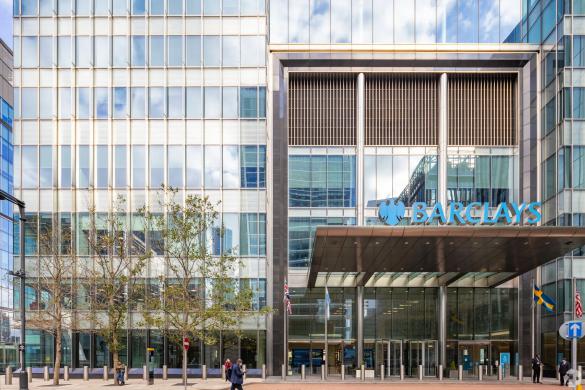
Barclays puts £750 million behind Canary Wharf
Barclays has agreed to acquire the long leasehold of its global headquarters at 1 Churchill Place for approximately £750 million. The transaction is another significant vote of confidence in London's office market and continues the trend of major occupiers choosing ownership where they have both the balance sheet and the long-term commitment to justify it.
Upwards-only rent reviews
One of the most significant changes to UK commercial leasing in decades moved a step closer this quarter. The English Devolution and Community Empowerment Act received Royal Assent, paving the way for a ban on upwards-only rent reviews once the relevant provisions are brought into force, currently expected during 2027. Existing leases are largely protected, but future lease structures may look rather different. The detail will evolve through consultation, but both landlords and occupiers should be paying close attention.
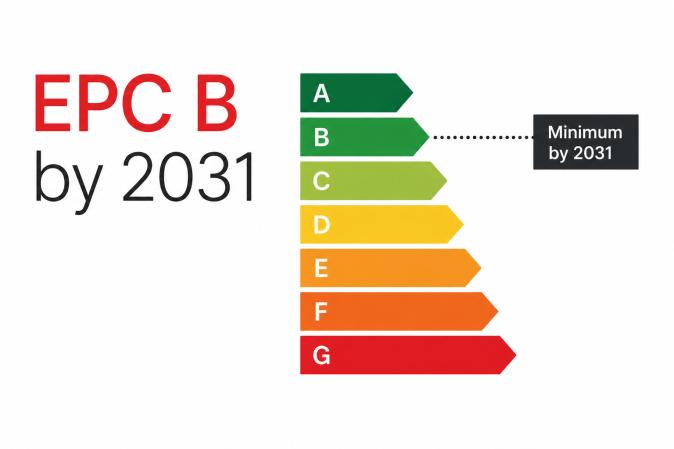
EPC B by 2031
The Government has now confirmed the direction of travel for Minimum Energy Efficiency Standards. Larger commercial buildings (over 1,000 sq m) will generally need to achieve an EPC rating of B by 2031, whilst the previously proposed interim requirement for EPC C has been dropped. Although secondary legislation is still required before the changes become law, the greater certainty is welcome. Five years may seem a long way off, but for owners with refurbishment programmes to plan, the countdown has already begun.
Spring4 Spotlight – What Have We Been Up To?
Faber, SR1 3DP

Location: Sunderland
Client Sector: Insurance
Success Story: Assignment of 55,000 sq ft office premises across three floors on behalf of a long standing insurance client. Spring4 sourced a single occupier to acquire the entirety of the client’s office space, mitigating a ten year lease liability.

40 Berners Street, W1
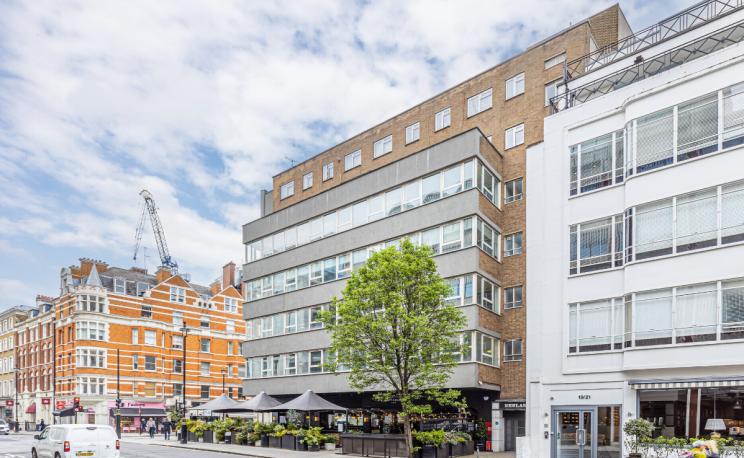
Location: London
Client Sector: Consultancy
Success Story: Negotiation of renewal lease for client’s 4,000 sq ft office premises in London. Spring4 led complex negotiations which incorporated landlord refurbishment works to the common areas of the building.
3 Dublin Landings, D01

Location: Dublin
Client Sector: Law
Success Story: Acquisition of new 46 desk managed office space in Dublin on behalf of law firm client. Spring4 also managed the exit of the client’s existing space including advising on highly contentious break clause conditionality.










.png)